
Ice dams can cause serious damage to your roof and the areas around it if they are not addressed quickly. The good news is that ice dams often develop slowly and give homeowners warning signs before major damage occurs. Understanding what causes ice dams, how to recognize them, and what steps you can take to prevent them can help protect your home during Minnesota winters.
What Causes an Ice Dam?
Under normal conditions, rainwater flows from the roof into the gutters and downspouts, where it is directed away from the home. This process helps prevent moisture from backing up under shingles or near the foundation.
During winter, snow accumulates on the roof and inside the gutters. Depending on the weather, this snow may remain in place for days or weeks. When daytime temperatures rise above freezing, some of the snow melts and begins to flow toward the gutters.
If temperatures drop again at night, the melted snow refreezes. This ice can block gutters and downspouts, preventing additional meltwater from draining properly. As snow continues to melt and refreeze, layers of ice build up and create a dam along the roof edge.
Temperature differences between the attic and the roof surface can also contribute to ice dams. Warm air escaping into the attic heats the underside of the roof deck, causing snow to melt from below even when outdoor temperatures are very cold. This repeated melting and refreezing cycle allows ice to form and grow along the eaves and in the gutters.
Warning Signs of an Ice Dam
Ice dams can allow water to back up under shingles and leak into the home, damaging ceilings, walls, insulation, and flooring. Fortunately, there are several signs that may indicate an ice dam is forming.
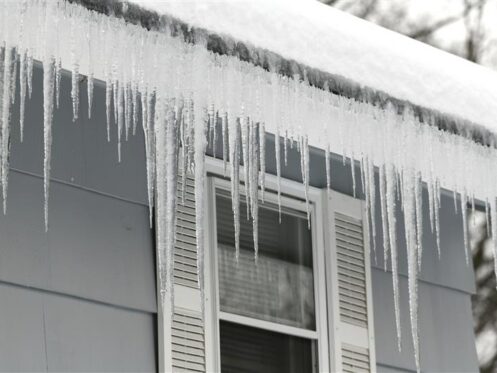
One of the most common indicators is visible ice buildup in the gutters or along the roof edge. Thick ice along the eaves or icicles hanging from gutters suggest that melting water is not draining properly.
While icicles may appear harmless, their weight can pull gutters away from the roof or cause them to fail entirely. Falling icicles also pose a safety risk to people, vehicles, and property below.
Inside the home, signs of an ice dam may include water stains on ceilings or walls, peeling paint, or bubbling drywall near the top floors. You may also notice increased moisture or mold growth in the attic, along with musty odors that indicate trapped moisture.
If left unaddressed, water intrusion from an ice dam can travel downward and affect insulation, framing, and even lower levels of the home, increasing the scope and cost of repairs.
What You Can Do to Prevent Ice Dams in the Future
The most effective way to prevent ice dams is to address the conditions that cause uneven roof temperatures. Improving attic insulation helps keep heat inside the living space instead of allowing it to escape and warm the roof deck.
Sealing air leaks around plumbing vents, ductwork, light fixtures, and attic access points further limits warm air movement into the attic. Proper attic ventilation is also essential, as it allows warm air to escape and draws in cooler outdoor air to maintain a consistent roof temperature.
If roof or insulation improvements are not possible before winter, temporary measures may help reduce damage. Removing excess snow and ice from the roof and gutters can limit buildup, but this work should be handled by trained professionals to avoid injury or roof damage.
Some homeowners use gutter products or ice-melting materials to manage ice buildup. Before using these solutions, it is best to consult with a professional to ensure they are appropriate for your roof and gutters and will not cause unintended damage.
Schedule an Annual Inspection
Scheduling an annual roof inspection in the fall or spring can help identify small issues before they lead to ice dams or other winter damage. Inspections can reveal insulation gaps, ventilation problems, and roof wear that increase the risk of ice-related issues.
If you need roof repair or inspection services, the team at Schmidt Roofing proudly serves St. Cloud and the surrounding areas. Whether your roof has been damaged by ice, snow, or age, our experienced professionals can assess your situation and recommend the right solution. Contact Schmidt Roofing today to schedule an inspection or learn how we can help protect your home throughout the winter.